Give a Task a Week and It Takes a Week — So Don't
Parkinson's Law says work expands to fill the time you give it, so a tighter self-imposed deadline gets the same job done faster.
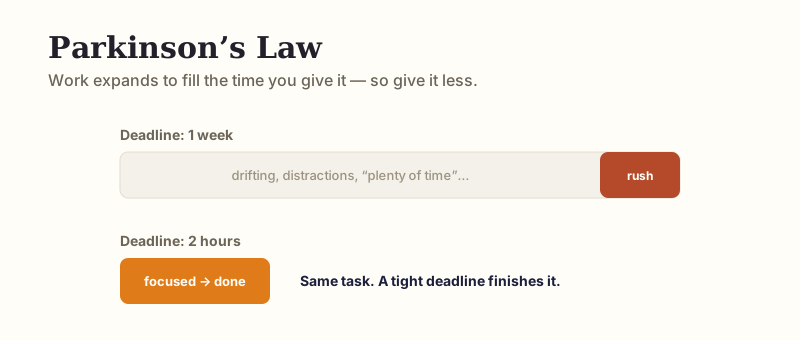
Ever notice how a project you had a month for somehow still gets finished in the last two days? That pattern has a name: Parkinson's Law.
What it is
Coined by British author Cyril Northcote Parkinson, the law states: work expands to fill the time available for its completion. Give yourself a week for a one-hour task and it'll somehow stretch across the whole week — filled with delays, second-guessing, and tea breaks.
The flip side is the useful part: shrink the time, and the work often shrinks to fit.
Why it works
A loose deadline gives perfectionism and procrastination room to breathe. With endless time, small tasks feel big and you keep "polishing." A tight deadline removes that slack — it forces you to focus only on what matters and to start now instead of "after one more video."
Urgency creates clarity. Constraints, oddly, set you free.
How to use it
- Studies: Don't say "I'll revise Accounts today." Say "I'll finish this chapter's sums in 45 minutes" and set a timer. The countdown pulls you forward.
- Studies: Give each assignment a deadline earlier than the real one. Treat your self-set date as final.
- Studies: Use timed mock tests at home. Working against the clock trains you for the real exam hall.
- Work: Block a meeting for 30 minutes instead of an hour — it'll stay sharp and end on time.
- Work: Break a big report into mini-deadlines: outline by 11, draft by 1, polish by 2. Small clocks beat one big vague one.
- Daily life: Set a 20-minute timer to tidy your room or clear your inbox. You'll be amazed how much gets done when the clock is ticking.
Make your deadlines tight but honest — challenging enough to push you, realistic enough to hit.
Time is elastic: give a task less of it, and watch it quietly get done faster.
Learn it free on ACES
Interactive notes, videos and quizzes for Plus One & Plus Two Accountancy, Business Studies and Economics — no login, no fee.
Start learning →